Paint correction in Los Angeles
Fine scratches and swirls that show in the sun, polished out of the clear coat by machine, in your garage. We read the paint depth on each panel before we polish any of it.
1 to 2 daysOne day for a 1-step polish, up to two for a 2-step.
Most swirls on a dark car come from brush car washes and from wiping off dust with a dry towel. They sit in the clear coat, the thin clear layer over the color. Correction levels that layer with a machine polisher until the marks are gone, or as faint as the paint can safely allow.
Signs your paint needs correcting
- Fine circular scratches that show in direct sun or under the lights at a gas station
- Black or dark paint that has gone gray and hazy
- Light scratches around the door handles and on the trunk lid, from keys and bags
- Dull rings where bird droppings or sprinkler water dried on the paint
- Shimmering trails that move as you walk past, left by an earlier machine polish
1-step or 2-step
A 1-step polish takes out most light marks. It is one stage, with one pad and one polish.
A 2-step cuts deeper first, with a firmer pad and a compound, then refines the finish so the cut leaves no haze behind.
The inspection decides which one your paint needs. If your car needs less than you came for, the report says so.

About 30 minutes at your car. You keep the report.
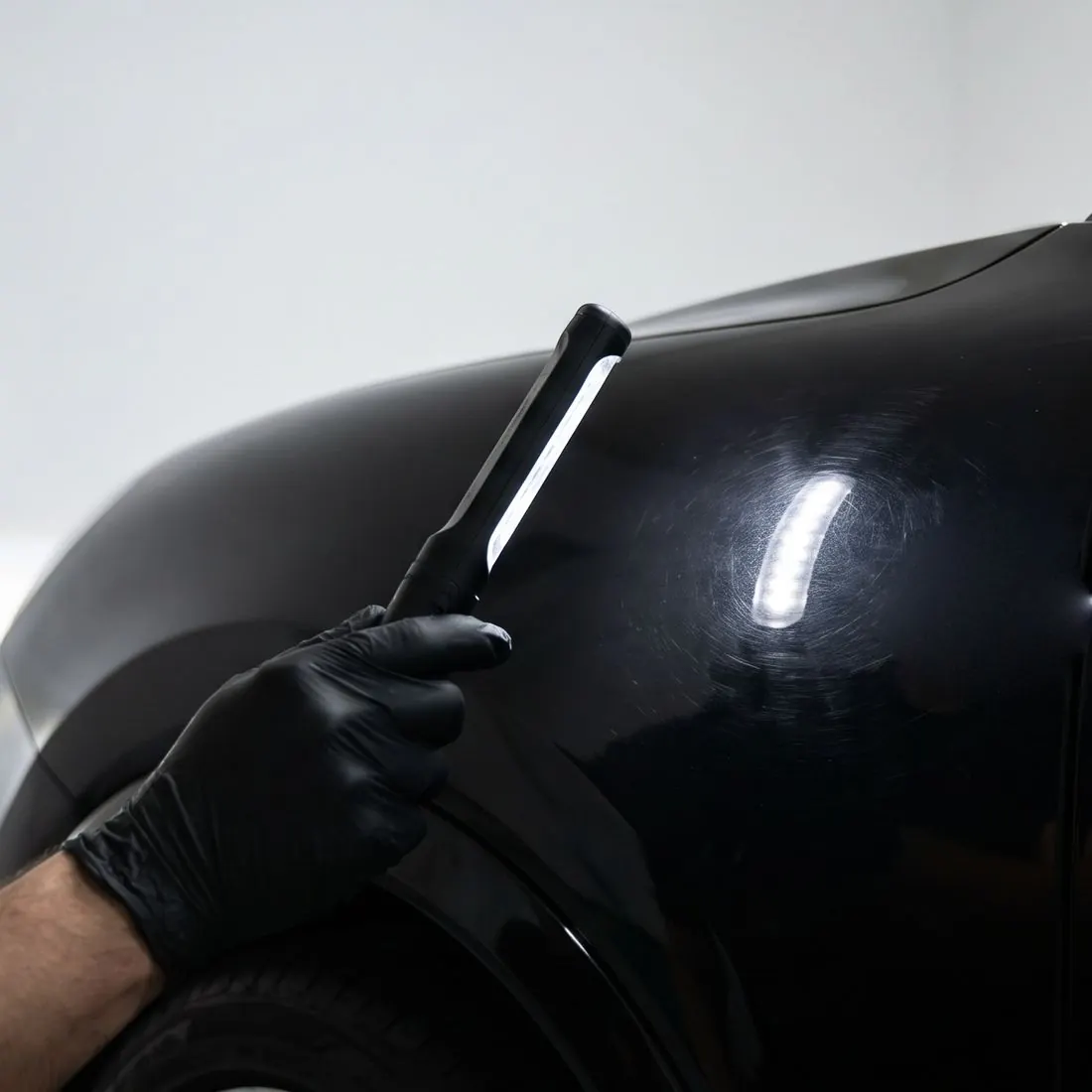
Before we price anything, we look at the paint where the car lives, in your garage or driveway. We bring the lights and the gauge, and the inspection is free.
What we look at
Every panel under a low, bright LED light that shows the swirls a garage bulb hides. We measure the paint on each panel, so we know how much there is to polish, and mark chips and old repairs on the map.
What you keep
The report, filled in at your car, with a fixed price for the work you choose. It is yours whether or not you book.
at your car
| No. | Panel | Paint depth | Notes |
|---|---|---|---|
| 1 | Front bumper | ||
| 2 | Hood | ||
| 3 | Left front fender | ||
| 4 | Right front fender | ||
| 5 | Left front door | ||
| 6 | Right front door | ||
| 7 | Roof | ||
| 8 | Left rear door | ||
| 9 | Right rear door | ||
| 10 | Left quarter | ||
| 11 | Right quarter | ||
| 12 | Trunk | ||
| 13 | Rear bumper | ||
| 6 to 13: the other doors, roof, quarter panels, trunk and rear bumper | |||
How we correct the paint
- The free inspection at your home, with a paint depth reading on each panel.
- Your report maps what we found on each panel, chips and earlier repairs included, with a fixed price. Nothing starts until you approve it.
- On the day, we wash the car and lift iron dust and tar with an iron remover and clay, so the polisher never drags them across the paint.
- Rubber trim and badges are taped off. We polish one test section first to choose the pad and polish that suit your clear coat.
- Then we work panel by panel and check each one under the light before moving on. Your paint report is updated at the end of each working day, with the panels we finished and photos under the inspection light.
What sets the cost of paint correction
- How much paint there is to polish, which the size of the car decides
- 1-step or 2-step
- How deep the marks run, and how many panels carry them
- Thin or repainted panels, which take a lighter, slower touch
- How hard the clear coat is: some paints polish quickly, others take longer
Every price is set at your inspection from the size of the car and the state of its paint, and fixed in writing before we start.
What correction can't fix
The depth reading tells us how much clear coat a panel can spare. A scratch that runs deeper than that will soften with polishing and stay visible, and the report marks it on that panel.
A rock chip is paint that is missing, so no polish can fill it. Clear coat that has gone cloudy or started peeling after years of sun needs repainting, and we tell you before you pay for any other work on that panel.
After the last panel
You get your report, updated with the after reading on every panel we worked, and a care sheet with the wash rules and their dates. New swirls arrive the way the old ones did, so the care sheet says how to wash the car from here on.
Questions about paint correction
Does polishing make the paint thinner?
Yes, by a very small amount. Correction levels the clear coat by taking a thin layer off it. That is why we read the depth on each panel first and hold back where a panel has little to spare.
Will the swirls come back?
Only the way they came. Brush car washes and dry towels put them back. Wash with a pH-neutral car soap and a soft mitt, and skip car washes with brushes.
Should the car be coated afterward?
That is your choice at the report. A ceramic coating goes on after correction, because it seals in whatever is underneath, and it makes the paint easier to wash. Correction on its own is a finished job.
My car is new. Does it need correcting?
Often a little. New paint picks up marks in transport and at the dealer's wash before delivery. If yours is clean, the report says so.
See what your paint needs before you spend anything.
The inspection is free and takes about 30 minutes at your home. You keep the written report and the fixed price whether or not you book the work.
Inspections by appointment. Same-day replies Monday through Saturday, 8:00 am to 6:00 pm.